
Explore Romania’s Work Visa Routes Available To Qualified Pakistani Applicants — Single Work Permit (standard employment), EU Blue Card, Intra-Corporate Transferee (ICT) Permit2026 UPDATE, and the Posted Worker Permit (Secondment).

Pakistani applicants guided nationwide
Every file tracked end to end
Guidance you can trust
From assessment to approval
Romania Work Permit Categories
New Unified Work Permit & Visa Platform
Max. ICT Permit Validity (Managers/Specialists)
Standard IGI Work Authorization Decision
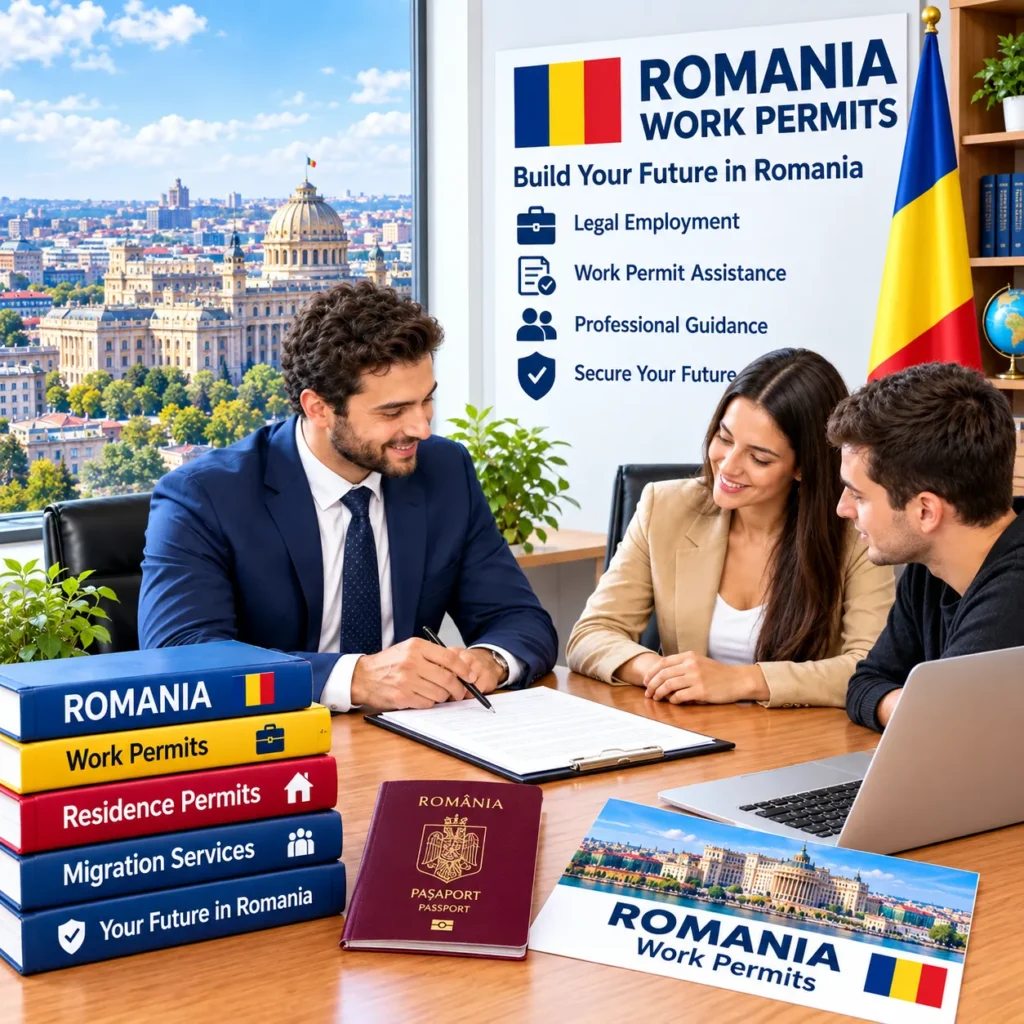
Romania’s work authorization process is employer-led: the Romanian company obtains a work permit from the General Inspectorate for Immigration (IGI), the worker then applies for a long-stay D visa at a Romanian consulate, and finally converts this into a residence permit after arrival. Romania is transitioning to a new unified work permit and visa system with an online platform, replacing the previous fragmented procedure, which may temporarily increase complexity during the 2026 rollout before ultimately simplifying the process. Since joining Schengen, a Romanian residence permit now also grants visa-free Schengen travel of up to 90 days per 180-day period. 7 Continents Migration Experts guides Pakistani applicants through the category that matches their job offer.
Visa and immigration requirements may change. Always check the latest requirements with the Romanian authorities before applying.
Romania is rolling out a new unified work permit and long-stay visa system via a new online platform, moving intake for all work permit and long-stay visa applications — plus related employer registrations — onto a single platform. While designed to simplify the process long-term, complexity may temporarily increase during the 2026 rollout as authorities standardize document requirements and stabilize inter-institutional workflows. This page covers temporary work permits only — Romanian permanent residence and citizenship pathways are covered separately.
7 Continents Migration Experts offers professional immigration guidance, tailored solutions, and dedicated support to help you move forward with confidence.
Explore the work visa routes available to qualified Pakistani applicants.
Romania's standard work authorization for non-EU/EEA/Swiss nationals with a job offer from a Romanian employer — an employer-led process requiring a work permit, a long-stay D visa, and finally a residence permit after arrival.
Work permit fee: approximately RON 100 (roughly €20-€100, depending on source — confirm the exact current fee via IGI before publishing). Long-stay D visa fee: approximately €100-€120.
Work permit (IGI decision): up to 30 days, extendable by 15 days for further verification (some sources cite a broader 30-90 day range depending on complexity/workload). Long-stay D visa: typically 10-15 working days after a complete application, though this can extend during the 2026 system transition.
Romania's route for highly qualified non-EU professionals, requiring the employer to first obtain a specific work authorization for highly-qualified workers before the applicant extends their stay into an EU Blue Card upon arrival.
EU Blue Card work permit fee: approximately RON 500 (roughly €100) — a higher tier than the standard Single Work Permit fee. Long-stay visa fee: approximately €120 (comparable to the standard route).
Standard extension/decision: 30 days, extendable by up to 15 days for further checks. Extension for Blue Card holders transferring from another EU member state: notably faster, within 15 days.
A permit allowing an employee transferred within the same company from a third country to work at a related Romanian entity — implementing the EU ICT Directive framework, covering managers, specialists, and trainees.
Comparable to the standard Single Work Permit fee structure — confirm exact current ICT-specific figure via the Romanian Embassy Islamabad or IGI before publishing.
Extension requests: 30 days, extendable by up to 15 days for further verification — generally comparable to the standard Single Work Permit timeline.
A permit for a qualified foreign worker temporarily deployed (posted/detached) from a company established in a third country, who remains employed by that company while working for a Romanian beneficiary of services under a service contract.
Comparable to the standard Single Work Permit fee structure — confirm exact current posting-specific figure via the Romanian Embassy Islamabad or IGI before publishing.
Extension requests: 30 days, extendable by up to 15 days for further verification.
We Assess Your Profile, Qualifications, Job Offer, And Eligibility Requirements To Help Identify The Appropriate Pathway.
Romanian temporary work permits, such as the Single Work Permit and the EU Blue Card, can generally count toward the continuous legal residence needed for future long-term settlement, subject to meeting ongoing employment, salary, and renewal requirements. Other categories are structured differently: the ICT Permit and Posted Worker Permit are capped, time-limited routes tied to a specific transfer or secondment, and are not intended as a direct pathway to permanent residence.Romania is implementing a new unified work permit and long-stay visa system, moving intake for all work permit and long-stay visa applications — plus related employer registrations — onto a new online platform. While designed to simplify the process long-term, complexity may actually increase during the transition period as authorities operationalize the platform and standardize document requirements — clients and their sponsoring employers should build in extra time and flexibility while this rolls out through 2026. Since Romania's Schengen accession, a Romanian residence permit now grants visa-free travel across other Schengen countries for up to 90 days within any 180-day period — a meaningful mobility upgrade worth mentioning to prospective clients weighing Romania against other EU destinations. Government fee figures for the Single Work Permit, ICT Permit, and Posted Worker Permit show some variance across sources (for example, RON 100 versus approximately €100 for the standard work permit) — always confirm the exact current fee via IGI or the Romanian Embassy Islamabad before advising a client.
Yes. Pakistani nationals are eligible for Romania's main work visa categories, including the Single Work Permit and EU Blue Card, with no nationality-based restrictions on these routes.
Yes, since Romania joined Schengen. A Romanian residence permit now grants visa-free travel to other Schengen countries for up to 90 days within any 180-day period.
The work permit itself typically takes up to 30 days (extendable by 15 days for verification), followed by 10-15 working days for the long-stay D visa — though Romania's 2026 system transition may temporarily affect these timelines.
The Single Work Permit is Romania's standard route for any qualifying job offer, typically valid up to 1 year. The EU Blue Card is reserved for highly qualified professionals with a university degree or equivalent experience, and offers a longer validity of up to 2 years and 3 months.
Yes, provided you are employed as a manager, specialist, or trainee at a qualifying overseas entity and are being transferred to a related Romanian entity. The ICT Permit is capped at 3 years for managers and specialists, and 1 year for trainees.
Romania is rolling out a new online platform in 2026 that will consolidate work permit and long-stay visa applications, along with related employer registrations, into a single unified process. Some temporary delays are expected while authorities standardize the system.
Employees who remain on the payroll of a company established outside Romania, but are temporarily deployed to work for a Romanian beneficiary of services under a service contract, provided the Romanian beneficiary obtains the required posting permit.
Your Romania Work Visa journey starts with choosing the right category. Let our team assess your profile, explain your options, and guide you through the application process.