
Complete guide for Pakistani students — Study Permit, PGWP, Spousal Open Work Permit & PAL/TAL (including Quebec’s CAQ) eligibility, financial proof, fees, processing time, documents and post-study options. Content last verified July 2026.

Study Permit
Bachelor's / Master's / PhD
309,670 spaces
IELTS / PTE / TOEFL / Duolingo
Required (GIC / bank statements)
Off-campus 24 hrs/week
PGWP (up to 3 years)
Yes (Spouse & children)
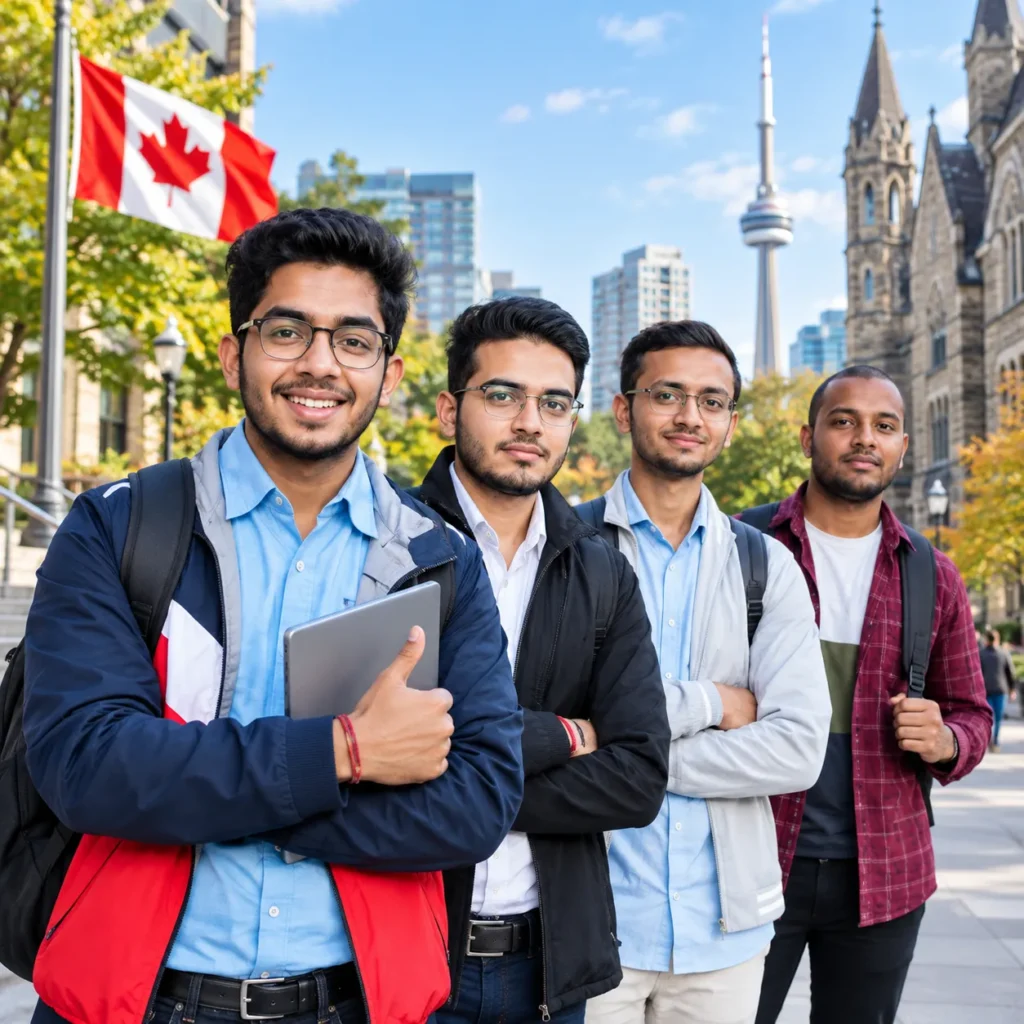
Canada remains one of the most popular study destinations for Pakistani students, combining relatively accessible admission requirements with a genuine, well-defined pathway from study permit to post-graduation work to permanent residence via Express Entry.
Canada operates a national study permit application cap — 309,670 application spaces for 2026, down 7% from 2025 — and most college/undergraduate applicants require a Provincial or Territorial Attestation Letter (PAL/TAL), though Master’s and PhD applicants at public institutions became fully exempt from both the cap and the PAL/TAL requirement from 1 January 2026. 7 Continents Migration Experts guides Pakistani applicants through the category that matches their programme and circumstances.
⚠ Major Change — the Student Direct Stream (SDS) — the popular ~20-day fast-track route for applicants from Pakistan and other eligible countries — was officially discontinued by IRCC on 8 November 2024. ALL applicants, regardless of country of origin, now apply through the single Regular Study Permit Stream, with realistic processing times of 8–12 weeks rather than the old SDS fast-track window. Any guidance still describing an active SDS route for 2026 is outdated and should not be relied upon.
Explore the four categories covered for Pakistani students applying to Canada — select one to see full eligibility, fees and documents.
The main study visa for any program longer than 6 months at a DLI.
Open work authorisation for eligible graduates of Canadian DLIs.
For accompanying spouses/partners and dependent children.
Provincial/Territorial Attestation Letter co-requirement.
Canada's core authorisation to study at a Designated Learning Institution (DLI) — required for any program of study longer than 6 months. This is the foundation for nearly every other Canadian study-related benefit, including on/off-campus work rights and eventual PGWP eligibility.
Canada's flagship post-study work authorisation, allowing eligible graduates of Canadian DLIs to work for any employer, in any occupation, anywhere in Canada — a common pathway into Canadian permanent residence via the Canadian Experience Class (CEC) under Express Entry.
Provisions allowing the spouse/common-law partner and dependent children of certain Canadian study permit holders to accompany them, with the spouse potentially eligible for an open work permit and children eligible for study without a separate study permit in some cases.
A province/territory-issued document confirming that a prospective student's study permit application fits within that jurisdiction's allocated share of Canada's national study permit application cap — a mandatory co-requirement for most college and undergraduate study permit applications since 2024, though with significant 2026 exemptions. In Quebec, this requirement takes the form of a separate, distinct document — the Quebec Acceptance Certificate (CAQ).
To apply for a Canada study permit, you typically need to meet the following requirements:
The permanent discontinuation of the Student Direct Stream (8 November 2024) is the most consequential recent change for Pakistani applicants specifically — it removed the distinct ~20-day fast-track route many previously relied on, and realistic processing under the Regular Study Permit Stream is now 8–12 weeks for all applicants regardless of nationality.
The 1 January 2026 PAL/TAL and national-cap exemption for Master's and doctoral students at public DLIs is a genuine, significant simplification for graduate-level applicants — clients pursuing graduate study should have this advantage clearly explained, since it meaningfully changes both the process and realistic timeline compared to college/undergraduate applicants.
Two further genuine 2026 changes deserve equal prominence: (1) as of 1 April 2026, post-secondary students no longer need a separate Co-op Work Permit for mandatory work placements — this is now handled directly under the study permit itself; and (2) Quebec-bound students face a genuinely separate process — the Quebec Acceptance Certificate (CAQ) via MIFI's Arrima platform — layered on top of, and processed independently from, the federal study permit application.
A possible new $250 "visa integrity fee" has been discussed for introduction in 2026, but official implementation guidance had not been released at the time of this review — monitor for confirmation before treating this as a settled cost.
The 2026 proof-of-funds figure shows genuine variance across sources reviewed (CAD $20,635 vs CAD $22,895) — confirm the current exact figure directly on canada.ca before publishing, as IRCC revises this threshold annually and using an outdated figure could cause a client's application to be under-documented. Visa officers are also now explicitly trained to detect AI-generated or generic Statements of Purpose.
Degree/certificate equivalency and attestation through the Higher Education Commission (HEC) and Inter Board Committee of Chairmen (IBCC) is commonly required during the DLI admission process itself, and a common source of delay when not understood in advance. Confirm the specific documents each target institution requires attested.
HEC Attestation
IBCC Attestation
Degree Equivalency
Relevant scholarship options for Pakistani students pursuing Canadian study include HEC-affiliated scholarships and select Canadian institutional awards, which can help address the financial-proof barrier that prevents many qualified students from applying. Check current eligibility criteria and application windows well ahead of your intended intake.
Fulbright (USA)
Canadian Institutional Awards
No. The Student Direct Stream was permanently discontinued on 8 November 2024. All applicants, including Pakistani nationals, now apply through the single Regular Study Permit Stream, with realistic processing of 8–12 weeks.
Up to 3 years, tied to programme length, for graduates of eligible programmes at eligible DLIs — with a special rule allowing even a 1-year Master's degree to qualify for a full 3-year PGWP.
No. As of 1 January 2026, Master's and doctoral students at public DLIs are fully exempt from both the PAL/TAL requirement and the national study permit application cap.
Get a free, personalised assessment from our migration experts in Islamabad.